Services / Aviation Detailing
Aviation Detailing in Fargo, ND
Detailing that respects your aircraft — and your investment
Typical time in shop: By aircraft · Free custom quote
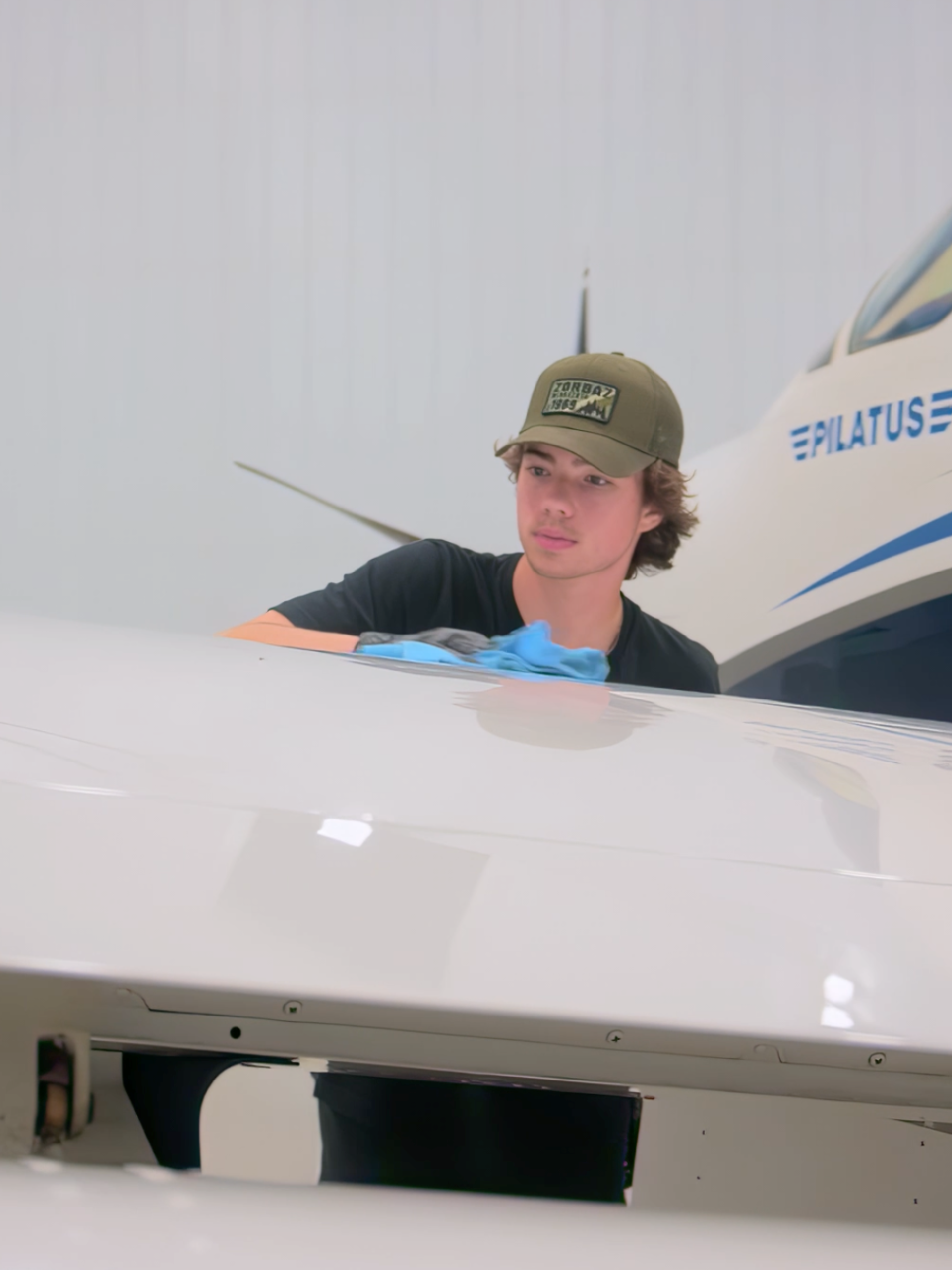 Aviation Detailing
 Fargo, ND · Aviation Detailing
Owners tend to call us after the annual. Somebody has had the cowling off, the belly is streaked black from the exhaust stack aft, there are grey scuff marks along the wingtip from getting shuffled around a crowded hangar, and the spinner that used to be a mirror has gone dull. None of that is an airworthiness problem. All of it is sitting there looking bad on an aircraft that represents a lot of money, and most of it gets harder to remove the longer it stays.
We detail aircraft on-site, at your hangar or on the ramp, using products chosen for aviation surfaces. To be explicit about the boundary: we are not an A&P shop. Nothing we do touches maintenance, repair or airworthiness. If something we uncover under the grime looks like more than cosmetics, we stop, show you, and let your mechanic take it from there.
Why it’s worth it
What you get
- Exhaust soot removed from the belly, which is the streaking that runs aft from the stack and bakes harder into the paint every month it sits
- Bug and impact residue off the leading edges, worked with products that won't stress paint or de-ice boots
- Brightwork polished on spinners, exposed trim and other polished metal, back to an actual reflection
- Scuff and transfer marks addressed, including the rubber and paint transfer that comes from tight hangar quarters and tug handling
- A clean surface for your mechanic to look at. Corrosion, seeps and cracks are far easier to spot on clean aluminum than under a film of oil and dirt
- Hand work around antennas, static ports, pitot tubes and sensors, which are identified before we start rather than avoided by guesswork
- Aviation-safe windscreen and window cleaning, since automotive glass cleaner can haze and craze acrylic
- Cabin and cockpit detailing, covering leather, carpet, side panels, glareshield and panel surfaces
- Dry-wash options for aircraft based where water access is limited or where wash-rack runoff is restricted
- Optional ceramic coating for aircraft paint, which slows how quickly soot and bug residue bond and makes each subsequent cleaning faster
How it works
Our process
We review the aircraft, surfaces and access with you and plan around your hangar or FBO.
Static ports, antennas and probes are respected throughout with appropriate products.
Exterior wash, brightwork and soot removal; interior surfaces cleaned with aviation-safe products.
Final inspection with you before the aircraft is ready.
What we do
Our aviation detailing process, in detail
We start with a walk-around and your input. Antennas, static ports, pitot tubes, sensors, access panels, recent paintwork and any composite repairs all get identified and marked before anything gets wet. Products are chosen for what's actually on the airframe, since aluminum, composite, acrylic and painted surfaces each have their own limits and automotive chemistry is frequently wrong for all four.
A visit is built around your aircraft and how it's stored, and generally includes:
- Exterior wash with aviation-safe soaps suited to paint, composite and bare aluminum
- Belly cleaning to clear exhaust streaking, oil residue and ramp grime from the underside
- Bug and impact residue removal from the nose, cowling and leading edges
- Brightwork polishing on spinners, exposed metal trim and polished surfaces where applicable
- Scuff and transfer mark removal from wingtips, tail surfaces and other hangar contact points
- Careful hand detailing around antennas, static ports, sensors and access panels
- Windscreen and cabin window cleaning with products intended for acrylic
- Interior detailing covering seats, carpets, side panels, glareshield and panel surfaces
- Dry-wash service where water access is limited, using waterless or rinseless aviation products
- Optional ceramic coating for owners wanting longer intervals between details
Good to know
Soot, brightwork, hangar rash, and why a clean airframe is easier to inspect
Exhaust soot is the defining problem, and it behaves unlike anything on a car. Every start and shutdown deposits combustion residue on the belly aft of the stack, and on a piston aircraft that residue arrives mixed with a certain amount of oil. Sun on the ramp bakes the mixture onto the paint, and each layer goes on top of the last. Cleaned quarterly it wipes off with the right product and moderate effort. Left for a year it needs solvent work and patience, and left for several it can permanently stain the finish. The interval you keep matters more than the products anyone uses — including ours.
Brightwork is the second thing owners ask about. Polished spinners, exposed metal trim and unpainted leading-edge sections oxidize continuously, and once the surface has hazed, restoring the reflection means multi-stage polishing with progressively finer compounds. It is slow, and the result lasts longer if it's maintained on a schedule rather than restored from scratch every couple of years. Polished aluminum with a protective product on it stays bright considerably longer than bare polished aluminum does.
Hangar rash is the category owners are most resigned to and least need to be. A significant share of what looks like damage on wingtips, tail surfaces and around the door is transfer rather than gouging: rubber from another aircraft's tire, paint from a tug or a wingtip that came too close, black marks that live on top of the finish rather than in it. A lot of that comes off with the right approach and no abrasion. The rest is a paint shop conversation, and we'll tell you which is which instead of polishing at something that is not going to move.
The inspection argument is the one we'd make hardest if you're deciding whether this is worth doing. Corrosion around fasteners, a fuel or oil seep starting somewhere it shouldn't, a crack forming near a stress point: all of these are visible on clean aluminum and effectively invisible under a film of oil and dirt. We are not inspecting anything and we do not sign anything. What we hand back is an airframe where your mechanic can actually see the surface, and if we notice something that looks structural or fluid-related while we're working, we'll photograph it and point it out.
Ceramic coating for aircraft paint uses the same chemistry as the automotive product, applied with aviation surfaces in mind. It doesn't stop soot from landing. It reduces how aggressively soot and bug residue bond to the paint, so each subsequent cleaning takes less work and less chemical, which over several years is where the value shows up.
FAQ
Aviation Detailing questions, answered
Do you come to our hangar, or do we need to bring the aircraft somewhere?
We come to you, at your hangar or on the ramp. Tell us your access arrangements when you request a quote so we can coordinate with your FBO and work around field operations.
Is it safe to use these products around antennas, static ports, and sensors?
That's the main reason aircraft detailing isn't car detailing. We identify antennas, static ports, pitot tubes and sensors before we start and work around them by hand. If we're unsure about a specific fitting, or about recent work near one, we ask before proceeding rather than guessing.
Can you remove exhaust soot that's already baked in?
Usually we can improve it substantially. How far depends on how long it's been accumulating and what condition the paint underneath is in. Several years of buildup on a finish that's already chalking may clean up to a point and no further. We'll look at your belly and tell you what we think is achievable before we quote it.
What about scuff marks and hangar rash?
A lot of what owners call hangar rash is transfer sitting on top of the paint, from a tire, a tug or another aircraft, and that comes off without abrasion. Marks that have actually cut into the finish are a different matter. We'll show you which category yours falls into and won't polish at something that isn't going to move.
Can you polish the spinner and brightwork?
Yes. Polished aluminum oxidizes constantly, so bringing hazed brightwork back is a multi-stage job with progressively finer compounds. Once it's restored, keeping it on a maintenance interval is far less work than starting over, and a protective product on top extends how long the shine holds.
Do you offer ceramic coating for aircraft paint?
Yes, as an option. The practical benefit is that soot and bug residue bond less aggressively to a coated surface, so subsequent cleanings take less time and less chemical. We'll talk through whether it makes sense for your aircraft type, paint condition and storage.
What if our aircraft doesn't have water access at its hangar or tie-down?
We use waterless and rinseless aviation products in that situation. It's also the answer where wash-rack runoff is restricted, which comes up at more fields than people expect.
Is this the same as aircraft maintenance or an airworthiness inspection?
No, and the distinction matters. We provide detailing and protective services for exterior and interior surfaces. We are not an A&P shop, we perform no maintenance or repairs, and we make no airworthiness determinations. If we see something during a detail that looks structural or fluid-related, we photograph it and show you so your mechanic can evaluate it.
Book your aviation detailing
Serving Fargo, ND, West Fargo, ND, Moorhead, MN, Dilworth, MN and the surrounding area.
Get a free quote