Services / Auto Detailing
Auto Detailing in Fargo, ND
Interior & exterior detailing done by hand, in Fargo
Typical time in shop: 3–6 hours · Free custom quote
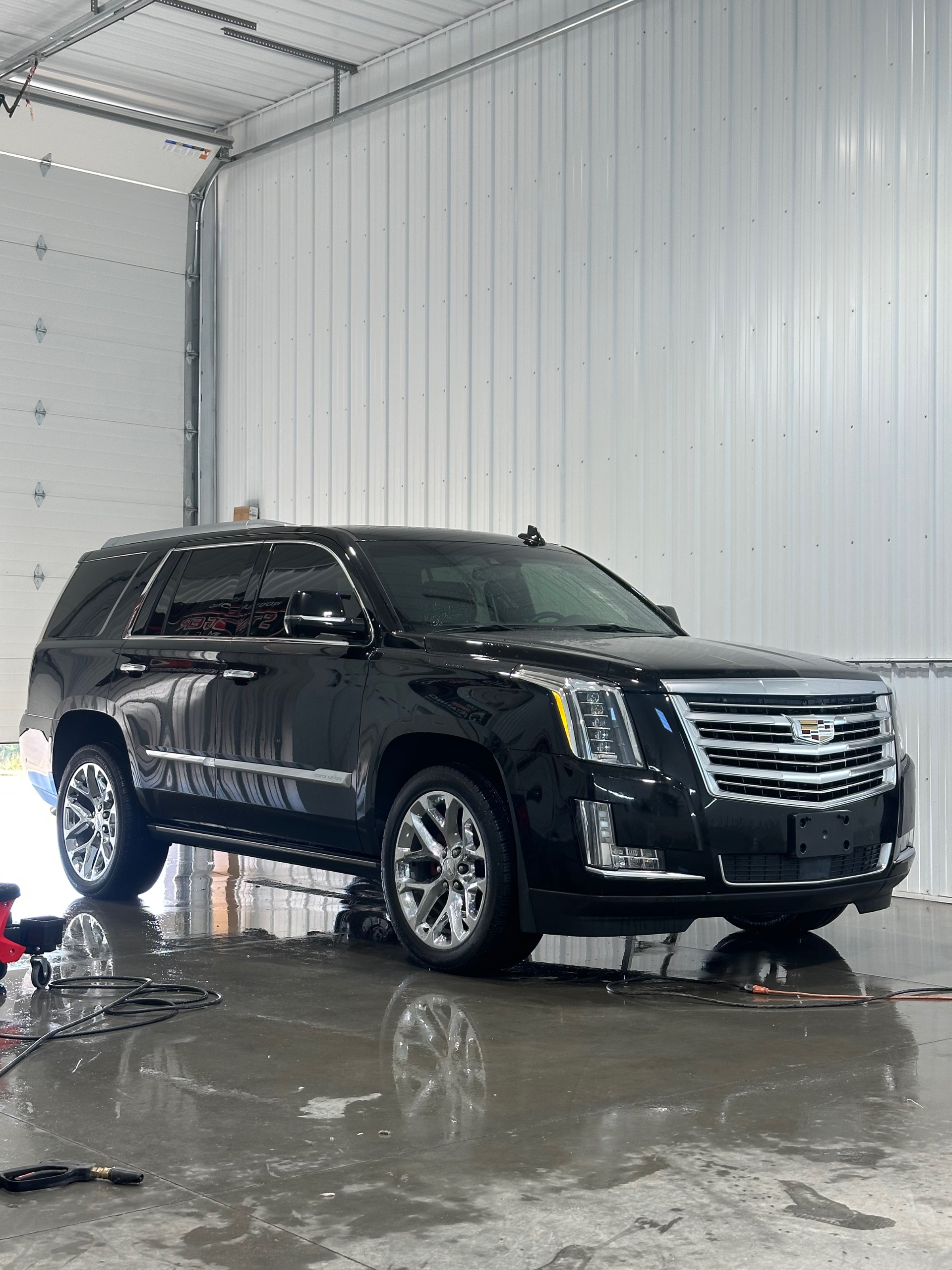 Auto Detailing
 Fargo, ND · Auto Detailing
Every April we get the same phone call. Somebody has finally washed off five months of grey road film, walked around the car in the sun, and realized the paint underneath looks nothing like it did in October. The white crust in the door sills won't wipe away. The carpet has a tide line on it. That is what a full detail is for. We take the vehicle apart in the sense that matters, working panel by panel and seat by seat until the salt and the baked-on film are actually gone.
A wash and a detail are different jobs. A wash moves the dirt sitting loose on top. A detail goes after what has bonded: iron particles embedded in your clear coat, salt crystallized down in the carpet backing, grime packed into the jamb seams. Then it puts protection back on so the next round has something to slide off of. It takes hours instead of minutes, and it is hand work start to finish, because a spinning brush cannot tell grit apart from paint.
Why it’s worth it
What you get
- Hand wash and hand dry using two buckets and pH-neutral soap, so the wash step lifts road salt without stripping the wax, sealant or coating you already paid for
- Clay bar and iron remover on the paint, which pulls out the embedded brake dust and rail dust a wash mitt slides right over
- Hot-water extraction on carpets and upholstery. We flush the salt out of the fibers and pull the water back out with it
- Leather cleaned and then conditioned, because our winter air is dry enough to pull the oils out of a seat and leave it brittle
- Door jambs, sills and the gas cap area done by hand. That is where winter grime actually collects, and it is where most quick services stop
- A recommendation you can decline. If your paint doesn't need correction, we say so at the quote, before you have committed to anything
- A clean foundation for tint, film or coating. Those products bond to decontaminated paint or they don't bond well at all
How it works
Our process
We inspect the vehicle with you and agree on the package and any add-ons before we start.
Foam pre-soak, hand wash, clay and iron removal so the surface is truly clean.
Interior extraction and dressing; exterior polish or sealant per your package.
We check the work under lighting and hand the vehicle back spotless.
What we do
Our auto detailing process, in detail
We start with a walk-around and a conversation. Salt film, sap, pet hair, a smell you can't place: we want to know what is bothering you before we pick products, because it changes the order we work in.
Depending on the package and the condition of the vehicle, a full detail typically includes:
- Two-bucket, pH-neutral foam hand wash and hand dry, with no automated brushes at any point
- Paint decontamination using clay bar and iron remover to strip bonded contaminants a wash alone leaves behind
- Wheels, wheel wells and tires cleaned, with brake dust removed and dressing applied
- Door jambs, gas cap and exterior trim cleaned and conditioned by hand
- Full interior vacuum, including under the seats and along the seat tracks
- Steam cleaning and hot-water extraction on carpets, mats and upholstery
- Leather cleaning and conditioning where applicable
- Interior and exterior glass cleaned streak-free
- Dash, console and interior plastics cleaned, with a UV protectant applied
- Wax, sealant or spray coating applied to the paint as a final protective layer
Who it’s for
Which vehicles benefit most
Daily drivers
The car you commute in takes the worst of it and gets the least attention. Salt spray from November through March, bugs and dust all summer, and a coffee spill or two somewhere in between. We go after the embedded salt in the carpets and door sills before it stains, and we rebuild a protective layer on paint that is exposed every single day. Most owners underestimate this vehicle, and it is the one that gains the most from a predictable twice-a-year rhythm.
Luxury and sports cars
Lower ride heights, softer clear coats and delicate cabin materials call for a lighter hand. We are deliberate about polishing technique so we aren't introducing new marring, and we are conservative with chemicals on leather, alcantara and carbon trim. Owners in this group often pair a detail with ceramic coating or film so the work actually lasts.
Trucks and SUVs
Work trucks and family haulers show up with mud, tool grease, dog hair and whatever the kids dropped between the seats. Cargo areas, floor mats and door jambs get extra time, and so do the lower panels that catch gravel-road spray. These vehicles usually need attention more often, simply because they work harder.
Classic and collector cars
Older paint and original trim call for restraint. We are not trying to make a forty-year-old car look like it rolled off the line last week. We will tell you what a given piece of trim can safely handle before we touch it, and we are comfortable declining a step that could do more harm than good.
Good to know
Why the spring appointment is the one that matters most
In a lot of the country, detailing frequency is genuinely a preference. Twice a year keeps things nice. Once a year is fine. Nobody's paint is at real risk either way. Fargo-Moorhead is different, and the reason is the five months of brine and sand that city and county crews put down between November and April. That mixture does not stay on the surface. It works into carpet fibers, packs into wheel wells, and sits against rocker panels and lower body seams for weeks at a stretch.
So the appointment we push hardest for is the spring one, booked as soon as the salt trucks stop running. Its job is physical removal: get the salt film and the grit off the paint and out of the carpet before it spends a warm summer sitting there. The difference between a vehicle detailed in April and the same vehicle detailed in July is usually visible in the wheel wells alone. A fall detail before the first hard freeze matters for a different reason. Water and grime trapped in seams and trim gaps expand and contract with every freeze-thaw cycle, and that is slow damage that shows up two years later as staining or cracked trim.
None of that means every vehicle needs the same schedule. A garage-kept weekend car driven a few hundred miles a summer is not facing what a daily-driven work truck faces. Part of the first appointment is working out a cadence that matches how you actually use the vehicle.
FAQ
Auto Detailing questions, answered
What's actually the difference between a car wash and a full detail?
A car wash, even a good one, is built to remove loose surface dirt quickly. A detail is a much slower process aimed at contamination that has bonded to the surface: embedded iron particles, oxidized wax, salt worked down into carpet fibers. It also covers work a wash never touches at all, like extraction, leather conditioning and door jambs. A wash is maintenance between details rather than a substitute for one.
How often do I really need to detail my car in Fargo-Moorhead?
For most daily-driven vehicles here, twice a year is the honest answer. One in spring to strip out the accumulated road salt, one in fall to go into the cold season clean and protected. Vehicles that see gravel roads or heavy towing may want more. A garage-kept weekend car can often go longer. We'll help you land on the right cadence when you get your free quote.
Will detailing remove scratches or swirl marks from my paint?
A standard detail decontaminates and protects, but it isn't paint correction. Swirl marks and light scratches are physical defects in the clear coat, and leveling them requires machine polishing. If your paint has visible swirling you want addressed, mention it when you book and we'll talk through whether correction makes sense for your vehicle and what result is realistic.
Is it worth detailing an older or high-mileage vehicle?
Often, yes. Getting years of accumulated road salt out of the carpets and off the lower panels does real good for a vehicle you plan to keep driving. That said, if the interior or paint condition means a particular step won't produce much of a visible change, we'll say so during the quote instead of billing for it.
Do you use harsh chemicals that could damage my leather or interior surfaces?
We use pH-neutral wash products on paint and surface-appropriate cleaners on leather, vinyl and plastic trim. High-pH chemicals strip factory coatings and dry leather out, which runs against the whole point of a detail. If you have a specific material or a known sensitivity, tell us when you book and we'll adjust the product selection.
Book your auto detailing
Serving Fargo, ND, West Fargo, ND, Moorhead, MN, Dilworth, MN and the surrounding area.
Get a free quote